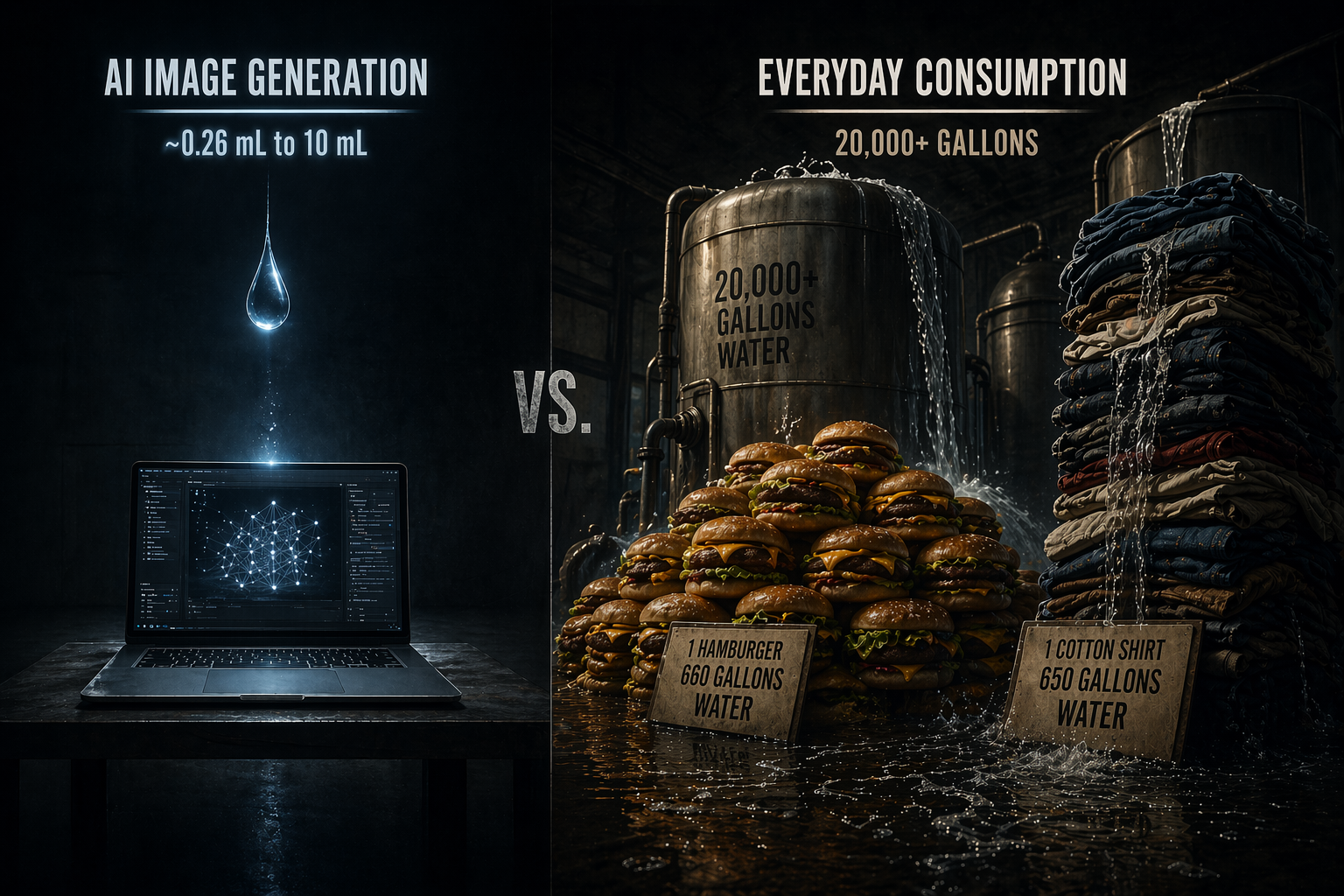
Let’s Look at the Receipts
You’ve heard it. Maybe you’ve said it.AI is destroying the planet. AI is draining water tables. AI is an environmental disaster.And here’s the thing: Part of that conversation is real.But part of it is getting used as a weapon. And if you’re a digital artist, a creator, or anyone building with AI tools right now, you deserve the actual numbers before bad math gets used to make you feel guilty for existing in this space.So let’s look at the receipts.
What One AI Image Actually Costs
A single AI image generation uses somewhere between 0.26 mL and 10 mL of water. That’s a few drops. At most, a sip.Compare that to:A hamburger: 660 gallons. A cotton t-shirt: 650 gallons. A pair of jeans: over 1,500 gallons.According to Bryant Research, you would need to generate millions of AI images to equal the water footprint of a single steak dinner. That’s not a defense of recklessness. That’s scale. And scale matters when we’re deciding what deserves our outrage.

Where the Scary Numbers Actually Come From
Here’s what most people sharing the “AI drinks water” posts are missing: the difference between training and inference.Training is what happens when a company builds a model from scratch. GPT-3’s training run used approximately 700,000 liters of water. That number is real. It happened once. It’s the infrastructure cost.Inference is what happens every time you type a prompt. That’s what you’re doing. That’s the sip, not the flood.Conflating the two is like blaming your phone for the power plant that charges it.

The Valid Part of the Criticism
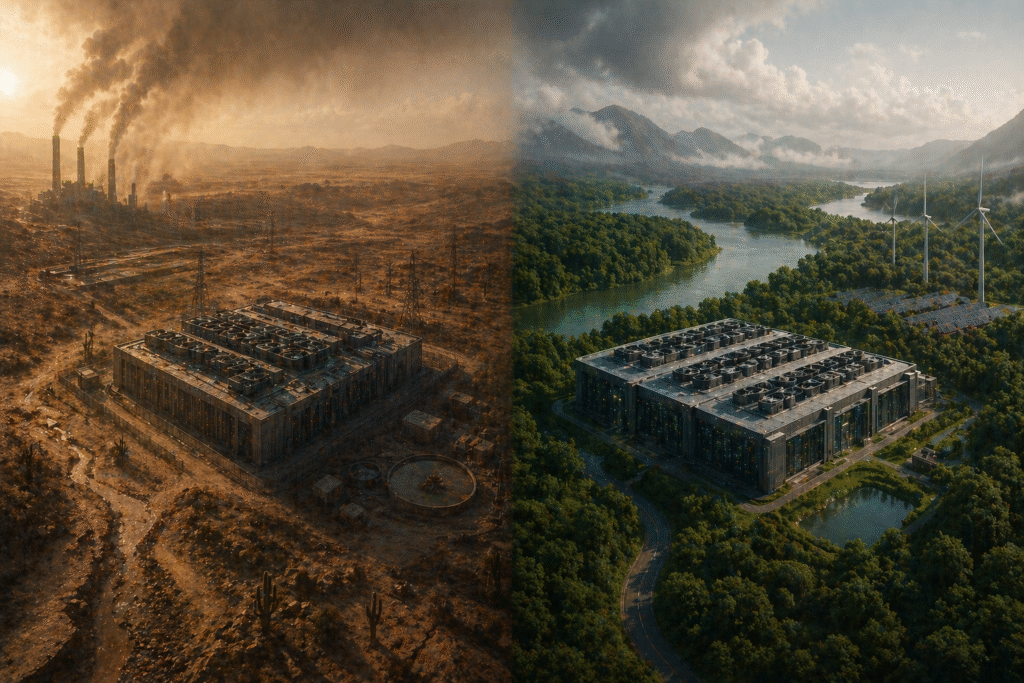
Let’s not skip this, because it matters.The concern isn’t really about global water totals. Earth has water. The concern is localization. Data centers built in water-scarce regions like Arizona or Texas can strain local water tables even when the global numbers look fine. That’s a real issue. It deserves pressure on the companies building the infrastructure, not on the creators using the tools.There’s also a transparency problem. Tech companies haven’t always been upfront about their water usage. Pushing for disclosure is legitimate.
What’s Actually Happening Right Now
Currently, in 2026, major tech companies are moving toward closed-loop cooling systems. These recycle the same water internally rather than evaporating it into the atmosphere. According to reporting on the Lincoln Institute’s data, this shift can cut a data center’s water demand by up to 86%.The industry has a problem and parts of it are actively solving it. That’s a different story than “AI is killing the planet.”
The Part Nobody Says Out Loud
A 2024 study published in UC Irvine Scientific Reports found that traditional human-led creative tasks can carry a carbon footprint 130 to 2,900 times higher than AI completing equivalent work. Why? Because humans require food, transport, heating, and physical space to operate.That’s not an argument that humans are inefficient. It’s an argument that the comparison being made in most of these posts is intellectually dishonest.AI isn’t impact-free. But agriculture accounts for 70% of all global freshwater withdrawals. Fashion runs on the same water math. Almonds. Beef. Cotton.AI is the new visible target. Visibility isn’t the same as guilt.
What You Should Actually Push For
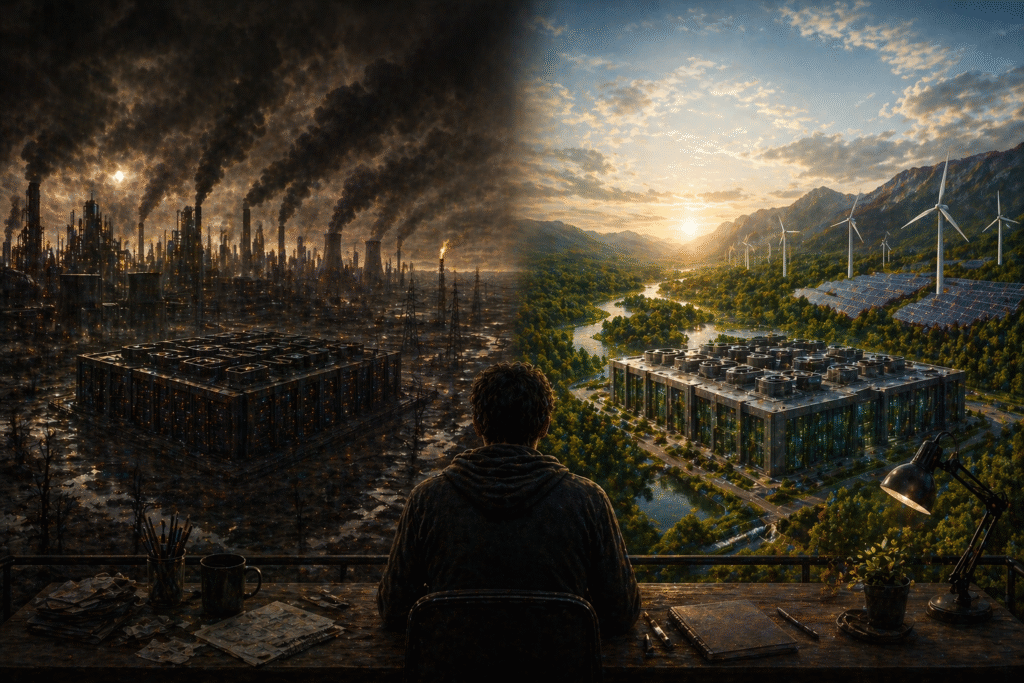
Better data center placement. Closed-loop cooling as an industry standard. Mandatory transparency reporting from tech companies.Not fear-driven rejection of tools you didn’t choose to be afraid of.The tools changed. The argument didn’t. Every generation of artists has had to decide whether the new thing was a threat or a surface. The ones who called it a threat wrote about it. The ones who called it a surface made work with it.Nobody has to make peace with any of this today. But the data is here when you’re ready. And it’s a lot less scary than the headlines made it sound.
Sources:
Bryant Research — A Drop in the Bucket: Comparing the Water Footprint of AI and The Cattle IndustryLincoln Institute of Land Policy — Data Drain: The Land and Water Impacts of the AI BoomUniversity of California, Riverside (Shaolei Ren) — Making AI Less “Thirsty”World Economic Forum — How water can unleash growth in the era of AI (2025)Tomlinson, B., Black, R.W., Patterson, D.J., & Torrance, A.W. — The carbon emissions of writing and illustrating are lower for AI than for humans — Scientific Reports, Vol. 14, Article 3732 (2024). https://doi.org/10.1038/s41598-024-54271-x