
Why bother with Prompting?
Every innovation made creation faster i.e. Collapsible paint tubes, Digital photography, MIDI + Home Synths. I value my time, and anything that saves it.
- Accelerated ideation: You can generate countless sketches, color palettes & compositions to optimize your time in the drafting stage of your projects.
- Various Application: Tools like Midjourney, Firefly, Nano-Banana & Sora produce parts or full artworks; ChatGPT & Claude can help with crafting narrative and networking.
Critique: "It’s lazy to use AI."
"Laziness doesn’t come from tools, it comes from people.” -Avi Hex
5 Essential Steps
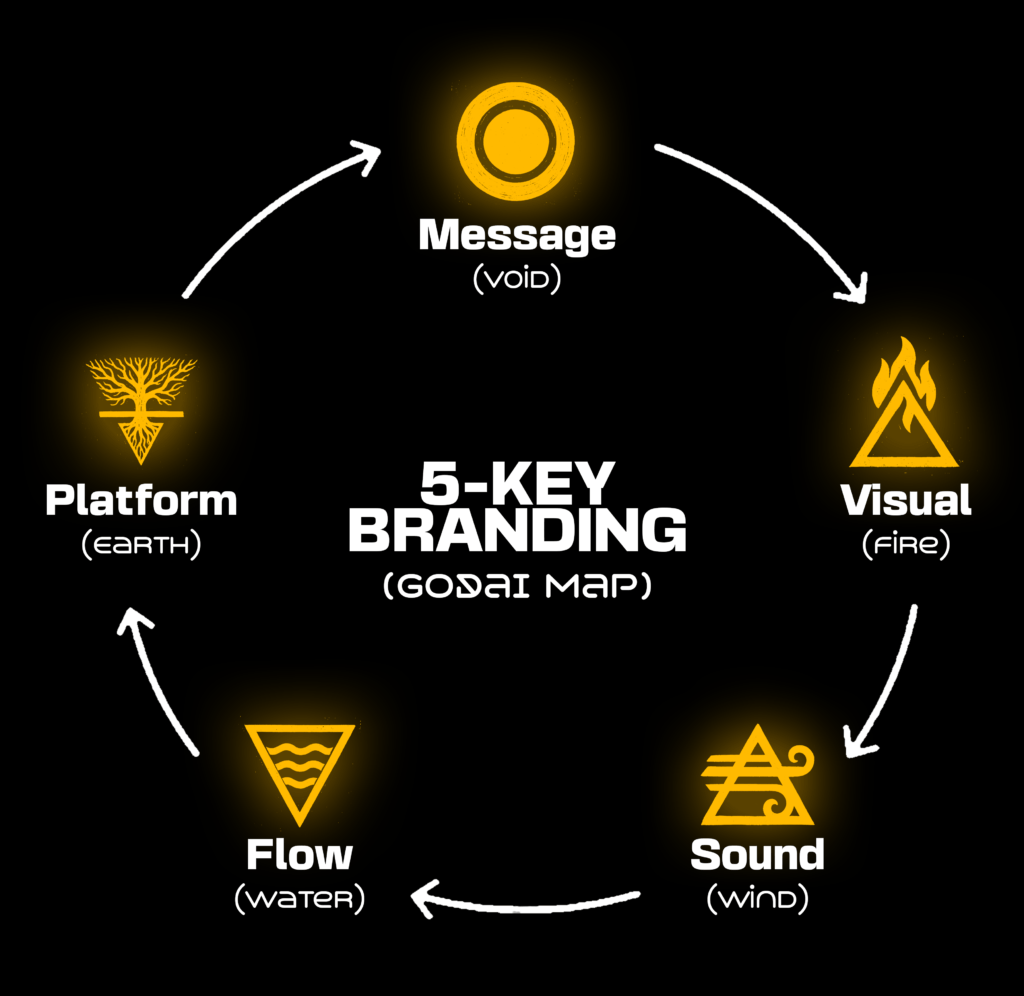
If your prompts “work sometimes,” you don’t need “better AI.” You have a system problem that can be fixed with a simple 5-step framework. We built it for branding and approaching Promptcraft like a professional artist in 5-steps.
- Empathic Intent (Message)
- Scene Syntax (Visual)
- Guardrails + Dials (Sound)
- Iteration Protocol (Flow)
- Prompt Blocks (Platform)
Critique: “AI art isn’t real art.” Answer: “Define art. I see art as someone's intent made visible.”
Avi Hex
We start with Intent: Feeling before craft. Name one emotion and make every choice serve it. Mine your memories for visual cues and thread them into the prompt so the model returns emotion, not just imagery.
1. Empathic Intent → MESSAGE
- Write a 1-line outcome and emotion before any prompt.
- Everything you type, must follow the lead of that line.
Ex: Viewer feels quiet dread watching a lone figure walk into fog.
2. Scene Syntax → VISUAL
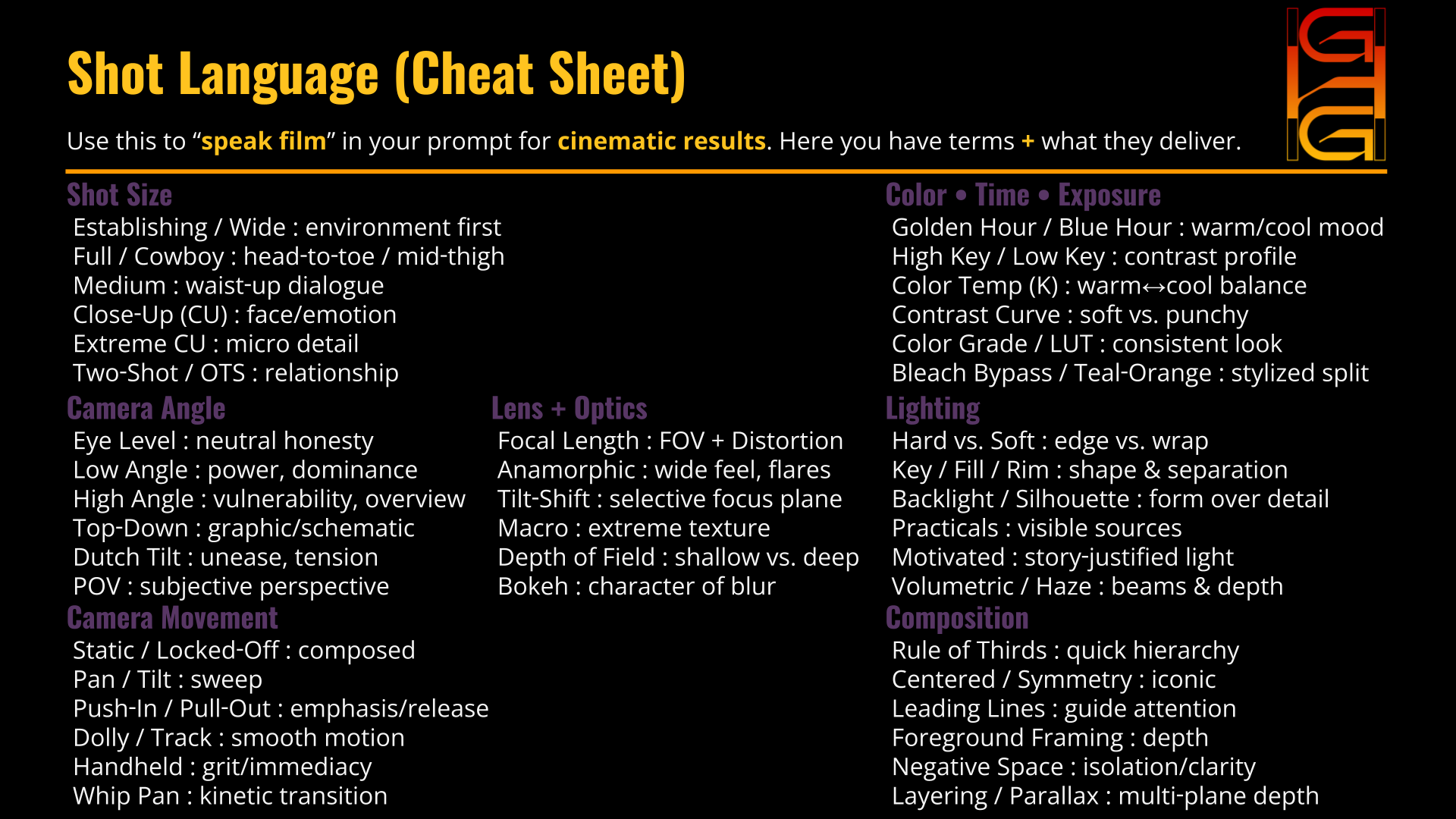
- Set the scene by learning Shot Language.
- Build blocks: Subject – Action – Setting – Camera – mood.
Ex: “Lone figure walking under elevated tracks, low angle 35mm, hard rim light, centered frame, tense mood.”
3. Guardrails + Dials → SOUND
- Set guardrails to keep your model on track: Aspect ratio, seeds, negatives.
- Ex: “–ar 1:1, –seed 123456, –no text, watermark, plastic skin.
- Treat the dials like a soundboard. You can push realism, pull spontaneity, set the vibe. All ringing back to your Empathic intent.
4. Iteration Protocol → FLOW
- Better prompts come from rapid iteration and model familiarity. Change one variable at a time and A/B test.
- Rule of 3: Draft 3 variants → pick 1 → branch 3 more from the winner.
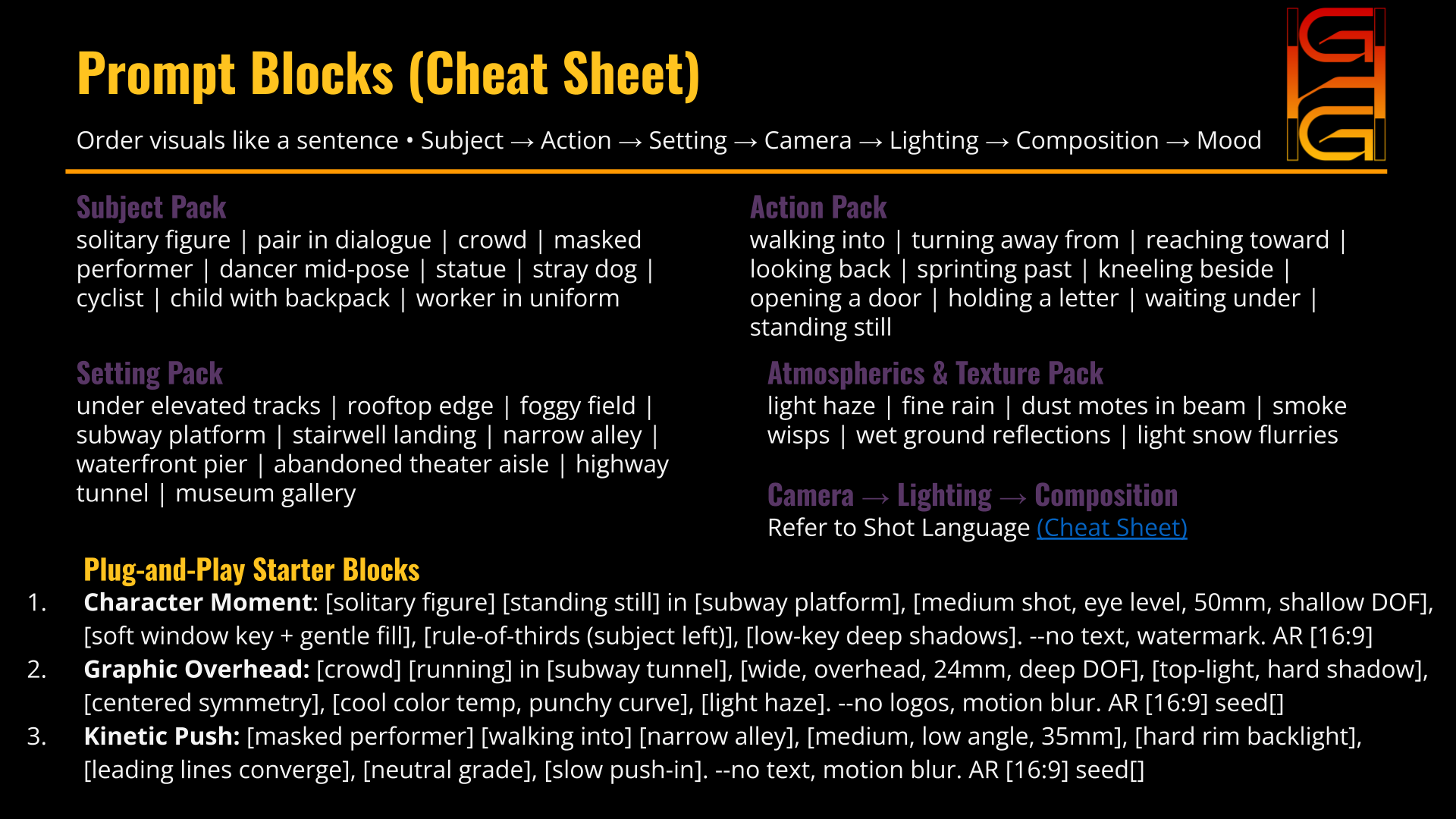
5. Prompt Blocks → PLATFORM
- Build reusable “blocks” (camera pack, lighting pack, action verbs).
- Template: [Subject] [Action] in [Setting], [Camera + Lens], [Lighting], [Composition], [Mood]. –no: [X]. AR [ ] seed [ ].
Critique: "AI steals from artists.”
“The ethics of data use matter, and they’re being addressed.” -Avi Hex
Mixing Mediums
While learning from the past to create the future is the essence of art itself. The difference is whether we do it consciously or blindly.
- We created the “Amplify Your Aesthetic” method to encourage prompts that come from your creative core. Like a real Art Director. [CHECK THE METHOD HERE]
- Also to lessen the need to place a fellow artists name in a prompt, if you understand the techniques + themes that guide their art.
- We can use AI as a studio assistant: generate concept art, colour studies & composition tests; then refine by hand.
- That refinement can be in part digital: We can import images into Photoshop or Blender to combine with hand‑drawn elements.
Critique: “AI will destroy the art industry”
“In any current industry, the ones who adapt will become the next standard.” -Avi Hex
Narrative & Network
- Draft bios & statements: ChatGPT + Claude can craft professional artist bios, statements & project pitches.
- 1. Speak plainly into a note taking app(Evernote,Notion)
- 2. Transcribe and refine your speech in the app.
- 3. Then use an LLM to polish for professional presence.
- Marketing & content: Brainstorm titles + hooks, write newsletters, social posts & SEO blogs. You can even refine video scripts.
- Write the content and then use AI to refine. Lets not flood the net with fully prompted text.
- To save time, use the transcription tactic above.
- Negotiation prep: Summarise contracts, draft counter proposals & rehearse negotiations before you make that call or enter that gallery.
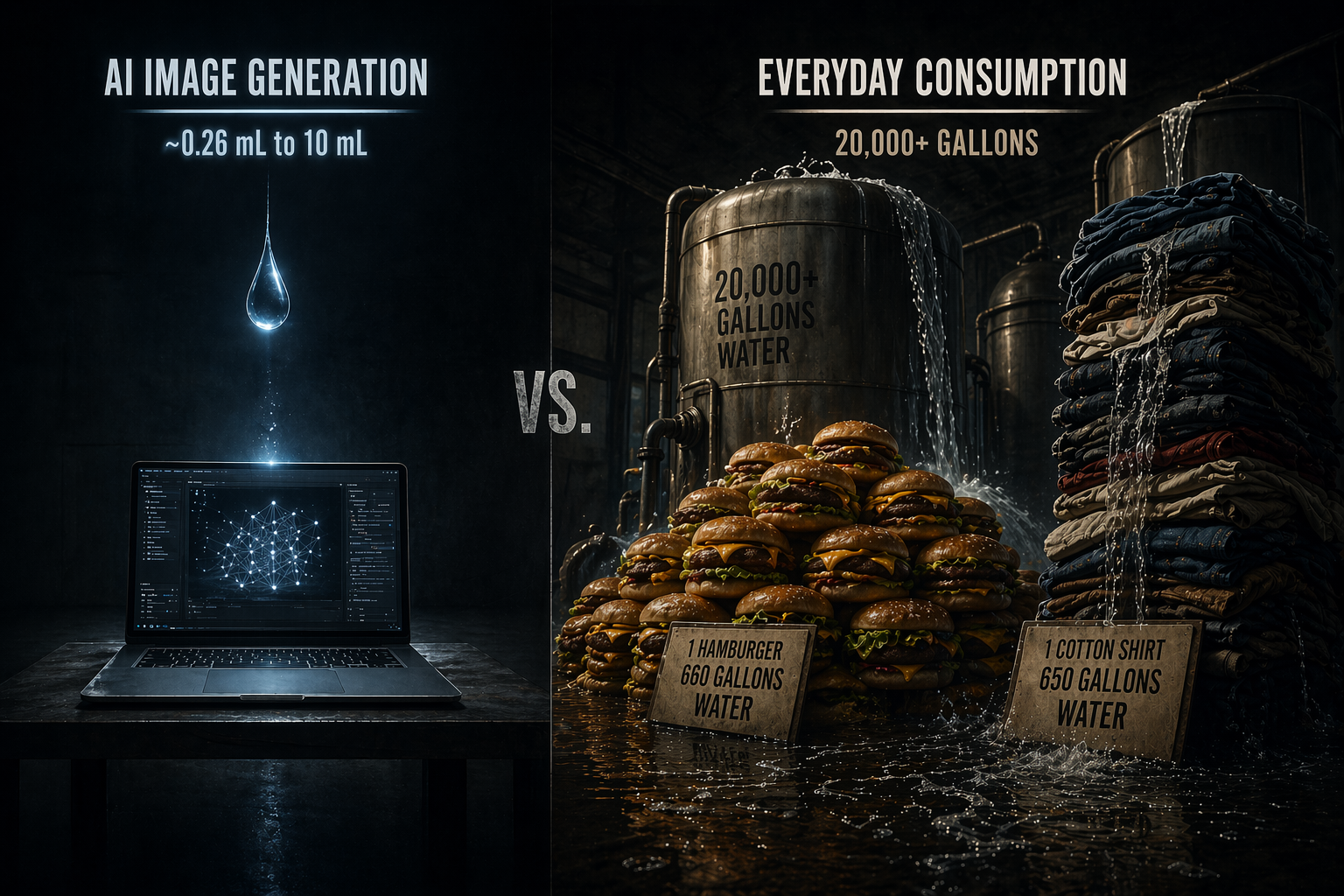
Critique: “The ramification of AI offsets their benefits.” Answer: “Training models is resource-intensive. But everyday use is drastically lighter.”
Avi Hex
LLMs & Generative Platforms
If you’ve reached this point of the page, you may realize it serves two purposes. I’m giving the basics of mastering promptcrafting away for free and addressing serious concerns around AI use that have been directed towards me from clients and friends.
- True (what matters):
- Model training is the heavy hitter. Massive energy use + accelerated hardware cycles.
- E-waste is real when GPUs are refreshed quickly and supply chains cut corners.
- Also true (what’s changing fast):
- Labs are shrinking training runs via distillation, sparsity/MoE, quantization, and data curation. Less compute for similar quality.
- New data centers push lower PUE, liquid cooling, and renewable PPAs; some capture/reuse heat for local grids.
- Inference is lighter than training, and keeps improving with smaller checkpoints and on-device acceleration.
GHG Stance on AI
AI has a real footprint. Mostly at the forge, not the flame. As the industry cuts training costs and creators adopt smarter workflows, the per-project impact drops while the creative upside compounds. Use the tool with discipline, document your pipeline, and keep your output worthy of the burn.
Top 5 LLMs for Dark Creators
Creative Brain
→ Pick 1–2 as your daily driver: [Titles Linked]
1. GPT‑5 (OpenAI): Multimodal co‑writer; sharp at brainstorming + refining prompts.
2. Claude Opus 4 (Anthropic): Long‑doc editor; clean summaries, safe by default, strong for contracts + lesson plans.
3. Gemini 2.5 Pro (Google): Workspace native; blends text, images & video for slides, briefs and research synths.
Builder’s Edge
→ Mix capability with control: [Titles Linked]
4. Grok 4 (xAI): X-Integrated, Web‑aware, tool‑using researcher; useful for trend scans + quick code.
5. DeepSeek R1 (Open-Source): Fine‑tune friendly; experiment locally or on a budget.
• Bonus Tip: Pair 1 generalist + 1 specialist; keep a ‘prompt journal’ to port styles between models.
Top 7 Generative Platforms
IMAGE
1. Midjourney: Cinematic, high‑impact concept art.
2. DALL·E 3: Easy, integrated with ChatGPT workflows.
3. Stable Diffusion: Open, customizable models; local control options558.
4. Adobe Firefly: Photoshop/Illustrator native; safe‑to‑use assets.
5. Flux: Strong realism; pipeline‑friendly API.
VIDEO
6. Runway Gen‑4: Text/image‑to‑video; great for storyboard, trailers, motion studies.
MUSIC
7. Suno AI: Full songs from prompts (lyrics + vocals); perfect for themes & soundbeds.
Pipeline Tip
The best AI outputs are coming from creators who use pipelines.
Draft and polish your prompt with an LLM → visualize in Midjourney/Flux → animate in Runway → score in Suno.
Action Plan & Next Steps
The best way retain information is immediate application.
So we end with a recap and how you can translate concept into skill.
- Start with Intent
- Prep with a 1-line outcome/emotion. Thread feeling into the prompt to humanize the model.
- Set the scene + Dial it in
- Utilize Shot Language for cinematic results, and understand Guardrails to control your model.
- Iterate often, with structure
- Rule of 3: Draft 3 variants of your prompt using Blocks → branch 3 more from the winner.
- Dominate your field.
- Narrative + Network are key in any industry. Prompt Crafting can be leveraged.